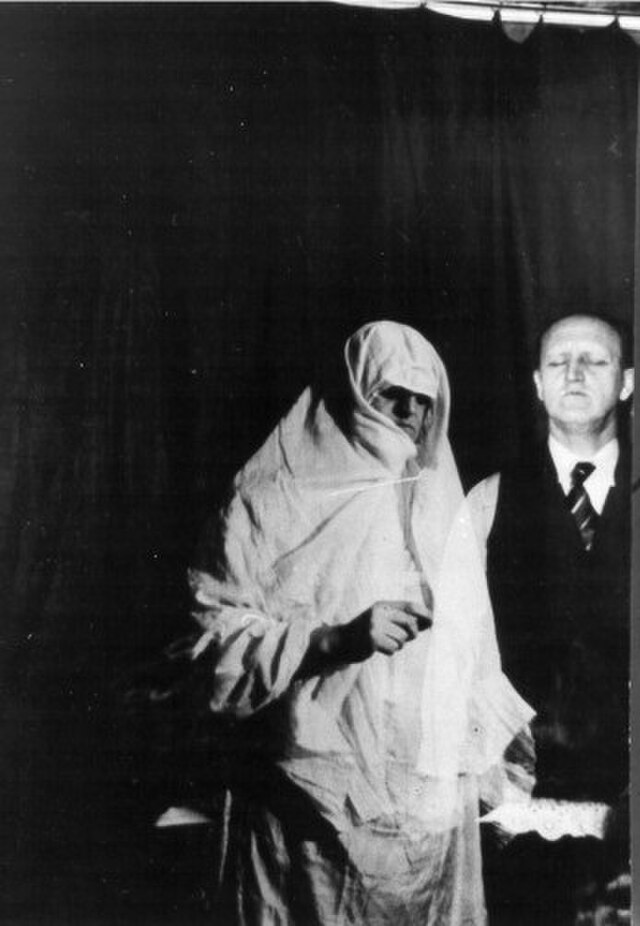
He Has No Head
The morning began, as most mornings do, with a profound sense of disorientation. Bartholomew Putteridge, however, was experiencing a degree of disorientation roughly equivalent to waking up inside a very small, heavily-carpeted blender.
He stretched his arms, inhaled deeply, a process that now felt intensely personal, as if the air was flowing directly into his chest without the customary pit stop in the upper respiratory district—and then he sat bolt upright.
He had no head.
This was not a metaphorical observation about his lack of judgment concerning sourdough starters or his habit of wearing socks with sandals. This was a physical fact. His collarbone met a perfectly smooth, slightly shimmering expanse of skin, sealing him off from the world just above the knot of his favourite silk pyjama strings.
Barty waited for the panic to set in. It was a fundamental human right, surely, to panic when one’s primary sensory organ and thinking apparatus had vanished. But the panic, like the head, was conspicuously absent. This, he realised, was because the mechanism for panic resided in the brain, which he currently lacked.
His consciousness, a neat little widget of self-awareness, seemed to have taken up residence somewhere near his sternum, buzzing with the low-humming efficiency of a well-maintained refrigerator.
‘Well,’ Barty’s voice emerged, a peculiar, airy sound manufactured by forcing air up through his vacant neck cavity, sounding rather like a pigeon trapped in a sousaphone. ‘This is inconvenient.’
He needed to confirm. Using the finely-tuned ambient awareness that had replaced sight a sort of holistic, 360-degree knowledge of his immediate surroundings he navigated to the full-length mirror.
There he stood: a perfectly normal man of medium height, excellent posture, and a clean, fashionable pyjama set, topped only by the absolute void.
‘Right,’ he sighed, the air escaping his neck-stump in a gentle, visible puff. ‘The crucial question: where did I leave it?’
The immediate challenges of the Headless Life were not philosophical, but intensely practical.
The first struggle was breakfast. Barty was a creature of routine, and routine demanded two pieces of artisan toast with marmalade and a strong cup of Earl Grey. He managed the toast by tearing off small, manageable pieces and dropping them carefully through the neck opening. This worked well, though the chewing sounds were internal and disconcerting.
The tea, however, was a disaster.
He lifted the full cup to where his mouth should have been, realised his mistake, and lowered it. He tried aiming for the hole, but the moment he tilted the cup, the hot liquid cascaded down his chest, soaking the silk pyjamas and pooling momentarily on his concave clavicle before dribbling onto the floor.
He swore, a sound like compressed steam escaping a leaky valve.
The difficulty lay in the fact that gravity, usually a helpful force, was now an absolute enemy. He needed a conduit. After twenty minutes of experimentation, he fashioned a rudimentary solution: a small, flexible silicone funnel designed for camping fuel, which he inserted neatly into the hole, allowing him to pour his lukewarm Earl Grey with reasonable accuracy.
The next hurdle was Mrs. Higgins.
Mrs. Higgins, his neighbour, was the type of person who viewed a non-mown lawn as a personal moral failure. Barty knew he couldn’t leave the house without addressing the elephant or rather, the missing head in the room.
He opened the door just as Mrs. Higgins was stooping to retrieve her morning paper.
‘Morning, Mrs. Higgins!’ Barty chirped, adjusting his silk dressing gown.
Mrs. Higgins froze, her hand hovering six inches above The Chronicle. She rose slowly, her eyes fixed on the empty space above Barty’s shoulders. She blinked once, twice, then straightened her spine, adopting the rigid neutrality of a woman who was determined to pretend she’d seen far stranger things on the morning commute.
‘Bartholomew,’ she said, her voice tight, ‘lovely morning. Are you celebrating something?’
‘Celebrating?’ Barty asked, mystified. ‘No. Why do you ask?’
‘Oh, no reason,’ she chirped falsely, dusting imaginary lint from the air. ‘Just that you seem to have misplaced a rather vital part of your ensemble. Perhaps you’ve opted for a more minimalist look today?’
Barty decided honesty was the best policy, even if it sounded insane. ‘Actually, Mrs. Higgins, I woke up like this. I seem to have no head.’
Mrs. Higgins sniffed loudly. ‘Well, I certainly hope you intend to find it, Bartholomew. We have a neighbourhood watch meeting tonight, and frankly, I find it quite disrespectful to attend without full accompaniment.’ She snatched her paper and marched briskly back inside, muttering darkly about the decline of community standards.
Barty sighed. If only everyone could be so understanding.
Life, even in a state of existential anatomical anomaly, must be governed by paperwork. Barty quickly discovered that his new physical reality rendered his driver’s license ‘unfit for identification purposes.’
The photograph was plainly obsolete. The man in the picture had a head—a slightly anxious, perfectly average head with a respectable amount of brown hair. Barty needed a replacement ID, and that meant a trip to the Department of Vehicular Management (DVM).
The DVM was a cathedral of beige mediocrity, filled with the aroma of stale coffee and crushed human spirits. Barty took a number, H143 and waited the requisite two hours.
When his number flashed, he approached the window of Ms. Gwendolyn Pips, a woman whose entire existence seemed devoted to the meticulous application of unnecessary regulations.
‘Name?’ Ms. Pips asked, not looking up.
‘Bartholomew Putteridge.’
She finally looked up, her expression shifting from professional ennui to startled disbelief. Her eyebrows disappeared somewhere near her hairline. She peered over her spectacles, then beneath them, as if his head might be hiding under the counter.
‘Sir,’ she said, tapping a polished fingernail on the counter, ‘I require your old license.’
Barty handed it over. Ms. Pips compared the photo to the man standing before her.
‘This man,’ she stated slowly, indicating the picture, ‘possesses a complete cranial structure. You, sir, do not.’
‘A fair assessment, Ms. Pips,’ Barty admitted. ‘That brings us to the new license, which I require precisely because the old one is no longer accurate.’
Ms. Pips frowned, consulted a thick manual titled Regulation 302: Unforeseen Anatomical Inconveniences.
‘Section 4, Subsection B,’ she recited. ‘All applicants must provide a clear photograph for identification purposes. The photograph must clearly display the face, with both eyes open, facing the camera, and neutral, non-obstructive headwear.’
‘I am facing the camera,’ Barty insisted. ‘And my headwear is entirely non-obstructive. In fact, it is entirely non-existent.’
‘But there is nothing to photograph, Mr. Putteridge,’ she countered, pointing at his neck-stump. ‘Where is the face?’
‘The face is implied, Ms. Pips! It’s an artistic statement on the nature of identity.’ Barty lowered his torso slightly, trying to present a flattering view of his shoulder trapezoids. ‘Look, I can still speak, I can still confirm my identity. Just take the picture.’
Ms. Pips sighed, her patience wearing thin. ‘Fine. Policy dictates I must attempt the capture. Please stand against the white background.’
Barty wheeled over to the designated spot, struck his best pose (hands on hips, chest puffed out).
Ms. Pips activated the flash. Snap.
She examined the resulting image. It was a perfectly clear, well-lit photograph of Bartholomew Putteridge’s torso, shoulders, and a smooth, slightly shiny disc of neck skin. The top quarter of the image was blank.
‘This is unacceptable,’ Ms. Pips declared, sliding the print across the counter. ‘It provides insufficient data points for biometric cross-referencing. The file will be rejected by central processing.’
‘What if I wore a mask?’ Barty suggested desperately.
‘A mask over what, Mr. Putteridge?’
‘A prop head! A nice, realistic one. Perhaps a distinguished gentleman with a monocle?’
Ms. Pips’s eye twitched. ‘That would be identity fraud via prosthetic deceit, punishable by a minimum of six months detention. Furthermore, the photograph must display you, Mr. Putteridge, not an elderly, distinguished gentleman named Reginald who possesses a monocle.’
Barty finally threw in the towel, realising that the system was simply not built to accommodate the physically impossible. He returned home, deeply demoralised. He was officially undocumented, a ghost in the bureaucratic machine, invisible to the very institutions designed to manage him.
The lack of a head didn’t just complicate government bureaucracy; it absolutely decimated his dating life.
Barty was lonely. He missed casual conversation and the thrilling, terrifying ritual of a first date. He attempted online dating, using a profile picture that he thought minimised the issue. It was a tight shot of his chest, featuring a charmingly crooked bow tie and the caption: A man who truly listens.
He matched with Clarissa.
Clarissa, according to her profile, was a practical urban planner who enjoyed vintage maps and ‘people who possess reasonable expectations regarding spatial reality.’ Barty, dangerously optimistic, arranged dinner at a high-end Italian restaurant.
He arrived first, seated himself carefully, and placed his best prosthetic head on the opposite chair. It wasn’t a gentleman with a monocle, but a simple, terracotta garden bust of Socrates, which he felt lent an intellectual air to the proceedings.
Clarissa arrived precisely on time. She was impeccably dressed and immediately noticed the large, silent ceramic bust.
‘Good evening,’ she said, extending a hand to Barty’s chest. ‘You must be Bartholomew. Is that… your friend?’
‘No, Clarissa,’ Barty sighed (the pigeon-sousaphone sound muffled by the restaurant linen). ‘That is Socrates. He’s taking the pressure off. And this,’ he gestured to his own neck, ‘is me.’
Clarissa’s eyes narrowed. Unlike Mrs. Higgins, she didn’t feign ignorance; she assessed the situation like a structural engineer identifying a dangerous foundation flaw.
‘You really don’t have a head,’ she confirmed.
‘Excellent observation,’ Barty said brightly.
‘Right,’ Clarissa said, sitting down, pulling out a small notepad. ‘Let’s establish guidelines. I appreciate honesty, Bartholomew, but I must admit, this throws a wrench into several logistical plans. For instance, kissing.’
‘It’s true, kissing is off the table,’ Barty agreed. ‘But I assure you, my personality remains entirely intact!’
‘And what about dining?’ she asked, eyeing the waiter approaching with the bread basket.
‘I’ve adapted,’ Barty said. He discretely pulled out a collapsible silver funnel, setting it up just before his bow-tie.
The food arrived a rich spaghetti carbonara. Barty, determined to be elegant, tried to twist the pasta onto his fork.
‘Don’t slurp, Bartholomew,’ Clarissa warned, though Barty was making no slurping sounds, merely carefully dropping a clump of pasta through the funnel.
The carbonara, unfortunately, was extremely saucy. The moment the pasta hit the funnel, the grease began to drip outward, staining his silk tie and dribbling down his white shirt front.
‘Oh dear,’ Barty whispered, sounding like a dying kazoo.
‘You’re leaking,’ Clarissa observed clinically, reaching across the table with a napkin to dab his collarbone. ‘This is highly impractical. Do you require constant dry cleaning?’
‘Not constant,’ Barty protested, trying to wipe the sauce with his cuff. ‘Only after saucy meals.’
The date pressed on, characterised by Clarissa critiquing every structural failure of his current form.
‘When you speak,’ she mused, cutting her veal with surgical precision, ‘the resonance is unsettling. It sounds as though you are speaking directly from your aorta. And how do you propose to navigate crowds? You have severely compromised visual acuity.’
‘I use ambient light awareness and my inner ear balance is superb!’ Barty insisted. ‘I can dance perfectly!’
‘Bartholomew,’ Clarissa placed her utensils down, ‘I am looking for a partner with whom I can build a future. A future involves mortgages, travel insurance, and group photos. You cannot be identified and you cannot reasonably eat a bowl of soup without hazard pay for the waiting staff. Furthermore, if we were to travel, TSA would have a meltdown.’
‘I am perfectly capable of building a future!’ Barty huffed, slightly insulted. ‘I am just structurally streamlined!’
‘You’re incomplete,’ Clarissa replied, standing up. ‘Look, I appreciate the novelty, but I need a man who knows where he puts his hat. Good luck, Bartholomew.’
She left, leaving Barty alone with Socrates, the spaghetti, and the deep, silent realisation that the world demanded a specific kind of physical conformity.
Barty retreated into his apartment for a week. The isolation gave his sternum-based brain time to think. He realised that the problem wasn’t the lack of a head; the problem was the lack of a socially acceptable placeholder for a head.
He needed camouflage. He needed utility. He needed to stop spilling marinara down his tie.
Barty, though headless, was rather adept with his hands. He visited the local theatrical costumer and the electronics store.
The result was magnificent.
He constructed a new head. It wasn’t a realistic skin-and-bone affair, but a functional art piece. It was a lightweight, hollow shell, crafted from polished mahogany and brass fittings, shaped like a perfectly respectable, slightly Victorian-era gentleman.
He called him Sir Reginald.
Sir Reginald possessed several vital features:
Optical Integration: Two small, high-definition camera lenses were fitted where the eyes should be, feeding directly into a miniature screen worn inside Barty’s shirt, giving him perfect, actual sight.
Acoustic Enhancement: A small microphone was placed behind a decorative grille, feeding Barty input. His voice output was managed by a discreet, adjustable speaker located just behind Sir Reginald’s perfectly carved moustache, allowing him to speak clearly, if with a slightly metallic timbre.
The Feeding Solution: Most importantly, a hinged jaw, cleverly disguised as a smoking pipe, opened to reveal a small, flexible stainless steel chute, routing food and drink safely past his shirt fabric and directly into the funnel below.
Barty emerged into the world. He was still Bartholomew Putteridge beneath the waistcoat, but on the outside, he was Sir Reginald—a distinguished, silent gentleman with exceptional posture and a remarkably deep voice.
He returned to the DVM. Ms. Pips was still there, looking utterly exhausted.
Barty (or rather, Sir Reginald) approached the counter.
‘May I help you, sir?’ Ms. Pips asked, showing genuine respect for the mahogany head.
‘I am Bartholomew Putteridge,’ Barty announced, the voice issuing smoothly from the speaker.
Ms. Pips blinked. ‘You retrieved it. Where was it?’
‘A minor incident involving a very keen taxidermist, Ms. Pips. All resolved,’ Barty lied smoothly. ‘I require a new license photo.’
‘Certainly,’ she said, noting the impeccably focused eyes of Sir Reginald. ‘The headwear is slightly unusual, but Regulation 302 permits commemorative head-busts if they are secured and do not obstruct the face.’
The picture was taken. It showed Barty’s torso and the magnificent, slightly stern face of Sir Reginald. The DVM happily issued the new license. Bartholomew Putteridge was officially documented once more.
Life, with Sir Reginald attached, was not merely manageable; it was, in many ways, profoundly improved.
Barty found that people treated Sir Reginald with an odd reverence. He received better service at restaurants. Traffic wardens were more lenient. People assumed he was a brilliant, eccentric philosopher deep in thought.
He secured a job based entirely on his new image: a specialist in museum security. His job required excellent peripheral vision (thanks to the integrated camera system) and the ability to stand still for long stretches, which Barty excelled at, particularly since his inner monologue was now a quiet whisper in his sternum, untroubled by the visual distractions of the world.
One evening, Barty was enjoying a quiet, sauceless meal at a café, carefully utilising the pipe-chute, when he heard a familiar, slightly strained voice.
‘Bartholomew?’
He turned Sir Reginald’s head with a graceful, hydraulic ease. It was Clarissa.
‘Clarissa, good evening,’ Barty said, his voice resonating perfectly.
Clarissa gaped. ‘You evolved. Is that a hat?’
‘This is Sir Reginald,’ Barty explained. ‘He’s helping me navigate the spatial realities of the modern world. He also contains excellent optical arrays and sound dampening.’
Clarissa cautiously sat down. She looked at Sir Reginald, impressed by his mahogany sheen. ‘He’s practical. Does he interfere with—’
‘Kissing remains challenging,’ Barty interrupted cheerfully. ‘But everything else is vastly improved. I’ve found that my identity is far more robust when framed by polished brass.’
Clarissa shifted in her seat. ‘Actually, Bartholomew, I’ve been thinking about your situation. You’ve solved the problem of identification and social interaction through ingenious mechanical substitution. That’s a profound act of urban planning.’
‘Thank you,’ Barty said, feeling a warmth that emanated entirely from his lungs.
‘Perhaps,’ Clarissa ventured, ‘we could try again. You do seem much more complete.’
Barty considered the proposal. He realised he didn’t need Clarissa’s approval or anyone else’s. He was whole, even without the original equipment.
‘Clarissa,’ Barty said firmly, speaking from the mouth of Sir Reginald, ‘I appreciate the offer. But the thing about living without a crucial body part is that you realise just how much unnecessary clutter those parts generate. I’m quite content with my minimalist lifestyle now. Sir Reginald requires minimal maintenance, is perfectly stoic, and never spills soup.’
Clarissa frowned, realising the perfectly engineered man before her was now genuinely superior.
‘Good day, Clarissa,’ Barty said, tipping Sir Reginald’s non-existent hat with a polite pivot of his shoulders.
He finished his coffee, packed Sir Reginald carefully into the carrying case (which he wore slung across his chest, giving him a delightfully round silhouette), and headed home.
Bartholomew Putteridge, the man with no head, walked down the street with a jaunty step. He was happy. He was documented. And he knew, with perfect, ambient certainty, that having a head was entirely overrated. The real key to a successful life was simply excellent posture and a cleverly positioned funnel.
ABOUT THE ARTIST

Ben Macnair is an award winning poet and playwright from Staffordshire in the United Kingdom. Follow him on Twitter @benmacnair
YOU MAY ALSO LIKE…

I met yr god and 1 more by John Yohe

I went to the state of limerence and all I got was this lousy shirt by Andrea Salvador

THE GORKO’S 2027 BEST OF THE NET NOMINATIONS!

A Compendium of Gemstones by James Callan

2 poems by Ryan Quinn Flanagan

Chicken by Joe Couture
Image: Einer Nielsen seance.jpg

Leave a Reply