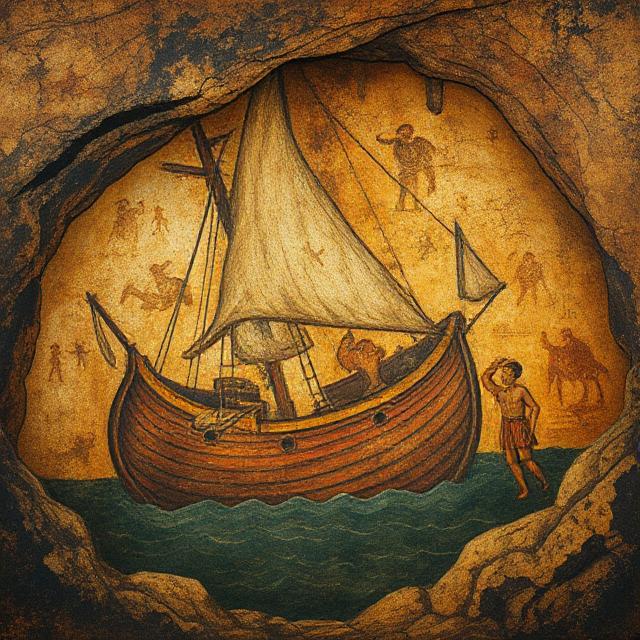
Cast Away
My girlfriend and I were talking through a holiday romcom. We were getting a bit drunk on Malibu straight from the bottle, laughing at Tom Hanks, ad-libbing lines from Castaway and Forrest Gump. Meg Ryan was stressed, looking pretty while pouting, and we kept shouting —Wilson!— loud and often and stupidly.
We got more drunk, had a semi-serious chat towards the end of the film (about the same time Meg Ryan was starting to warm up to the charms of the man who was monopolizing the retail bookseller business, hijacking her own). We discussed how marriage is overrated, a matter of course, conformist and bourgeois. We agreed that we didn’t need religion or legalities to validate our love, to officialize our feelings, to mimic our friends, or appease our parents. Over another slug of room-temperature Malibu rum we high-fived our mutual stance, our joint assessment: marriage isn’t for us.
Maybe I should have picked up on the shift of energy after our talk, addressing my girlfriend’s spiraling mood after that high-five that we shared. I probably should have marked her sullen descent, the fact that when I next shouted ‘Wilson!’ she didn’t laugh, didn’t even smile. Instead, she reached for the Malibu and took an extra long gulp from the bottle, pushing it away in disgust, excusing herself to retire to our bedroom.
At the time, I was oblivious, but I recall it now: she muttered something which in retrospect just may have been ‘There must be more to life than this.’
What can I say? I was drunk and content. I wasn’t tuned in to my girlfriend, to anything beyond the glow of the screen, the luminous cast of warm, budding love blossoming between two unlikely soulmates.
‘I love you,’ I called out from the couch.
The bedroom door shut with undue force. I shrugged, and drank a little more. I finished the movie.
A few days later, I came home with an orchid that I saw outside someone’s doorstep. Beside the flower had been a sign which read ‘To a good home. Take care of me and I’ll love you forever!’ Great, I thought—a free plant to spruce up the apartment. Something pretty for my office, which had become my girlfriend’s meditation room after she moved in. The jade leaves would match the yoga mat. The purple flowers would accent the bronze Buddha statue and Tibetan singing bowl.
These were my untroubled thoughts, not supposing my apartment no longer had a meditation room, in no way entertaining the notion I no longer had a girlfriend. Yet as the breakup note that she left for me pointed out: ‘Life is like a box of chocolates.’ I set down the plant and whispered what she didn’t bother to write out: ‘You never know what you’re going to get.’
As if watching the sad bits in a heartfelt romcom, victim to the sudden cue of minor chords in a moving musical score, witnessing a heartbreaking scene of an island castaway losing a loved one, I stared down into the botanical contents of a ceramic pot, and watered it with tears that fell freely from my face.
My vision blurred, my balance swayed. I was lost, like a castaway on some jutting rock or sandbar off the coast of Malibu. Worse, I was adrift, far out on open water, bobbing on the depths of my despair. I stumbled, sat down, and slumped, heaving but otherwise inanimate. Like a plant, a pretty orchid or a volleyball, like Wilson, I floated on a cold, placid surface that mirrored the sun and masked an abyss that knows no bottom.
Where the yoga mat used to be, an orchid was already sagging.
I will love her forever. But marriage wasn’t for us.
ABOUT THE ARTIST

James Callan is the author of the novels Anthophile (Alien Buddha Press, 2024) and A Transcendental Habit (Queer Space, 2023). His fiction has appeared in Apocalypse Confidential, BULL, X-R-A-Y, A Thin Slice of Anxiety, Mystery Tribune, and elsewhere. He lives on the Kāpiti Coast, Aotearoa New Zealand.
YOU MAY ALSO LIKE…

I met yr god and 1 more by John Yohe

I went to the state of limerence and all I got was this lousy shirt by Andrea Salvador

THE GORKO’S 2027 BEST OF THE NET NOMINATIONS!

A Compendium of Gemstones by James Callan

2 poems by Ryan Quinn Flanagan

Chicken by Joe Couture
Image generated on openart.ai
Leave a Reply