A Brief History of Transportation
Henry Ford Continuum for Perpetual Locomotion, Edsel Sector — formerly the Territory of North Dakota
Lecture 47A — transcribed and annotated as it happened by student, Aron Kennedy Toole, Watcher-7, Linguistic Archivist (second-year).
Telepathic fidelity rating: 92%. Some glee-chucks omitted for clarity.
Chrono-Quadrant 994 — Earth time
The long shadow of the lecturer breached the auditorium before he did. He approached the lectern, pseudopods cloaked in a monk-like robe, and retracted his hood.
Good morning, class. Please access text H-sixty seven in your modules.
A new theory catalogued by noted Earth archae-anthropologist Hašem Quan Q-Tyrnx-Four posits that Automobila sapiens were the dominant life form of Earth. Today, we will examine his findings, beginning with the H₂O-propelled vapor pods that dominated the planet before the event known as The Great Swallow of eight-five-eleven B.G.F.
Tyrnx-4 theorizes that as the species matured, it developed internal symbiotes — carbon-based co-pilots—to enrich sensory experience and decision-making. This union gave rise to the Combustion Era, when the creatures’ bodies amalgamated and hardened into radiant alloys and their mating calls could be heard for kilometers.
By the period called the Bronze Age—circa two-thousand G.F.—the species achieved near-full sentience. Their exoskeletons opened and closed to admit their organic halves, forming a perfect biomechanical hybrid — the legendary Driver Stage—now regarded as the apex of Automobila evolution.
We will explore the paradox, examining how this anomaly may have influenced our own morphology and the curious absence of wars, pestilence, and hatred in our society. Upper Eureastern geography notwithstanding.
Let us begin.
A five-fingered paw is raised.
Ah, yes… Benson, Gargiulo. We last heard from you when you queried the visionary Stone Pedal Mechanism popularized by the denizens of Bedrock — and the vehicle of celluloid legend, Barney. I hope this isn’t another digression; we covered that in the last quadrant.
Tittering gurgles and grunts bounced off the pock-marked walls.
Professor, you mentioned the Great Swallow. There seems to be a lot of confusion about Earth and its remnant archaeology around that time. Do you think the Hymaculah Theory has credence?
The professor looked up from the lectern—his face a sagging composite of bored amusement.
Well, Hymaculah, as you know, was a criminal against the Amalgam, though some of his theories do hold up. May I continue?
Gargiulo wasn’t letting go.
But sir, about the archaeology—could the heat from Earth’s core that fused most carbon-based forms, make analysis virtually impossible?
That’s conjecture! Quatrains!—It has never been proven!
The professor’s folds compressed and expanded, forming an irritated fan.
Now, Bas Gargiulo’s contributions aside, are there any more interruptions before we proceed?
The air thickened—humid with telepathic discomfort.
Good. First things first.
The hall shimmered with projected images of Buck Rogers–inspired automata—torpedo-shaped vehicles gliding awkwardly above the assembly.
There are few known examples of what the elders referred to as ‘gravity-defying cars.’ Yet ephemeral archives retrieved from the magma vault have produced several historical documents and case studies—believed to be the work of the Galaxan scholar and scientist H. G. Wells.
A hushed reverie settled over the room.
Professor Wells demonstrated that such vehicles once streamed through the stratosphere, enabling expedited international travel and commerce across every social and economic stratum of the planet. The recovered vessels exhibited extreme frontal damage, suggesting head-on collisions—perhaps a consequence of overpopulation in the upper altitudes or ritualized aerial combat. Or, as Lord Sumter-Vasquez fervidly argues in his treatise Differing Navigational Skills of the Twenty-Second Century—drivers from New Jersey.
The note-devils worked feverishly, embedding observations into every accessible nomenclature.
An image of a domed, wheel-less vessel appeared.
H₂O-propelled vapor pods—extracting moisture from the atmosphere as fuel. These were preceded by fission-based prototypes. Rudimentary organisms of transparent construction and low emotional resonance that once drifted along the planet’s hardened circulatory veins. Though efficient, they lacked spirit, odor, and growl.
A Tesla Model 3 flickered into view.
These monstrosities ran on electrical current, the lecturer intoned, accompanied by a series of chuckle-snorts from the audience, supplied by a self-contained power module. The early Electrics were soft-bodied and temperamental, prone to death after brief use. Yes, these were the primitive ancestors of the ‘glorious combustion wagons’ that later defined the peak of soulful inefficiency.
A 1990 Ford Taurus materialized—commonly referred to, he noted, as the ‘jellybean.‘
While the term implies a consumable nutrient, we could find no integration between it and biomatter vehicles. Still, we can observe the evolutionary trajectory clearly. This leads us to believe that this was a prime example of what the ancients referred to as a ‘transitional amphibian.‘
A 1959 Cadillac Coupe DeVille emerged next, accompanied by the faint hum of engines and horns.
Ahh, now this specimen demonstrates the first true melding of bionics and mechanics: hardened shells, vivid mating displays—chrome, fins—and deep, rumbling courtship calls. A decisive movement toward organics. It screams ‘mature predator.’ Trynx-4 believed they communicated through horn resonance and pavement scent trails.
The same car reappeared in a later state—eroded by time and the elements. Within, a desiccated human skeleton slumped behind the wheel; only the skull remained intact, fused to the frame by mineral deposits.
As you can see, the human and the mechanism are perfectly merged, performing as one.
A four-taloned hand rose from the audience.
Is that where one of its brains was housed?
Yes, the professor replied. Let us not laugh—for one day we ourselves will be viewed as primitive, and extinct.
The hall lit up once more. Oohs and ahhs levitated from the seats mingled with faint scents of atomized musk.
The Model-T Ford.
Another example of automotive-human integration.
Observe the ocular apertures resembling primitive optic nerves, the extensive use of mammal-based appointments, the curvature of its frame. The integrated family unit. The canopy evokes the fabled contour of Jadinks Clorentpz, whose proportions were once federally standardized to define female desirability traits—the highest expression of sentient evolution before the onset of de-evolution.
The following reconstructions were derived from surviving two-dimensional archives. Only fragments of actual specimens have been recovered. Theoricians feel that, due to their high organic content, most were vaporized during the cataclysmic event. Much of the reference data has been lost to time—as has been the case with the more highly evolved bio-specimens.
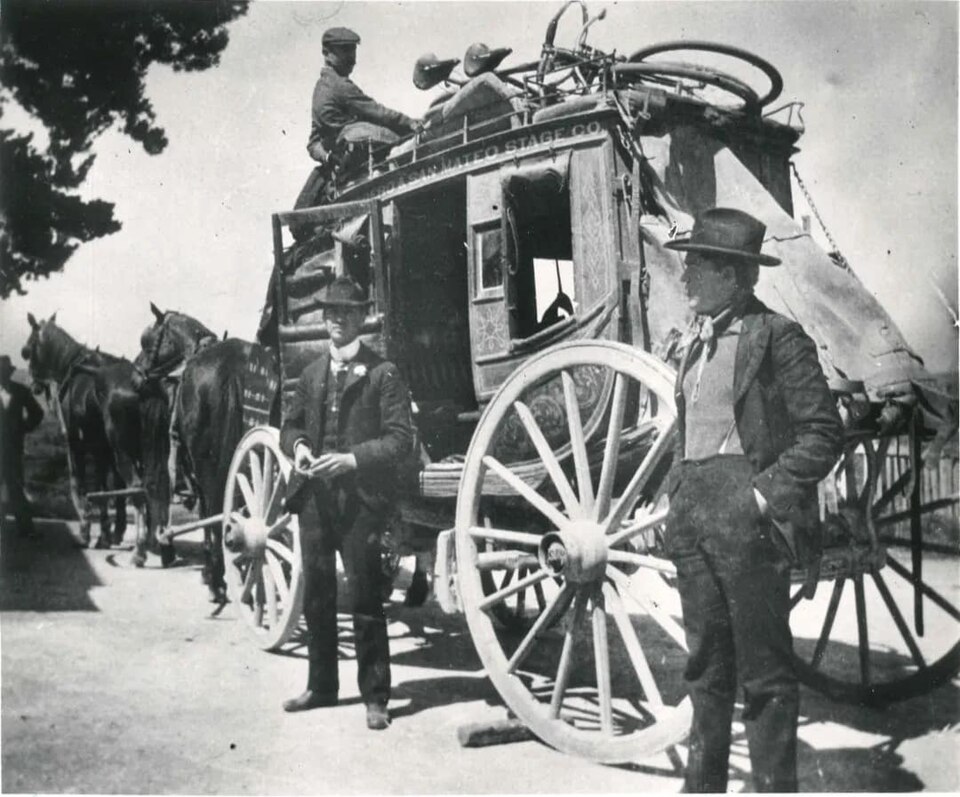
A horse and carriage. A stagecoach.
Is it possible that humans created these vehicles? A quizzical voice from the back chimed.
Impossible, came the reply.
Note the evolution from bipedal existence: the musculature, the gleam of intelligence in its eyes, the prevalence of hooves and dense hirsute coating—the natural emergence of the people-integrator chamber organ.
A Roman Chariot blazed across the auditorium.
We are approaching millennium. Observe the evolution of the human in the command pod—darker, more muscular—almost equine.
Walla-wallas simmered through heavy openings.
A montage of primitives and moderns on horseback bounced off the lit, awestruck faces of the students.
The most evolved form—where humans achieved full integration. This type of transportation was exhibited throughout the centuries—the primates often referred to as ‘rebels’ or ‘agitators.’ Little did they know these people were merely visionaries.
So, what does this all tell us? Yes—Das Chantamcimmungs?
A smaller figure rose.
That overreliance on technology, combined with a disregard for all things organic, led to their demise—and our birth. Perhaps proof that evolution does not move forward, only sideways?
Perfect! the professor phlegmed. You’ve clearly absorbed your Q-Tyrnx-4.
In closing, I’d like to paraphrase the great anthropoid evangelist, Paddy Chayefsky: ‘Humans. Poor Bastards.‘
Cryptographers haven’t been able to fully decipher that last word. We think it has something to do with a corrupt procreation event.
The lecture ended. Applause echoed through the building as the lights brightened. The professor padded off the dais on heavy, digitigrade limbs, content to have molded and enriched young minds, pleased that his lecture had been free of any trace of presentism. Students rose, stretching their furred necks, flicking tails, adjusting vision correctors balanced on snouts.
And so History of Transportation 101, Sixth Intelligence, adjourned for the allotted life segment.
The percussion of claws on tile followed as the students filed out.
A shared misericordia hummed through the silent hall.
Outside, beneath a sky of ochre gas, floating spires reached toward the double moons.
Gallops and whinnies could be heard in the distance.
Appended to the transcript — fragment at lower scroll inserted by scribe:
Syntax replication from Papal Scourges and Its Complicity in World Domination, by one ‘Pope Alexander.‘
To err is human.
ABOUT THE ARTIST

Patrick Carella is a longtime advertising writer whose fiction and creative nonfiction blend satire, cultural memory, absurdism, and emotional unease. His work has appeared or is forthcoming in HOBART, BULL, and CafeLit.
YOU MAY ALSO LIKE…

Je Me Souviens and 1 more by Trevor Jones

Equal Parts by Michael Igoe

The Gift for The Weakest by Shawn Scott Smith

PERFECT: BABY BEFRIENDING GOAT DEFIES LAWS OF GRAVITY

TV Pitches To Appeal To A Millennial Demographic That Longs For A Time When Big Bowls Of Cereal Meant Comfort And Not The Realization That It’s All They Can Afford To Eat by Robert John Miller


Leave a Reply