The Schizophrenia of Covers and the Rules of the Game
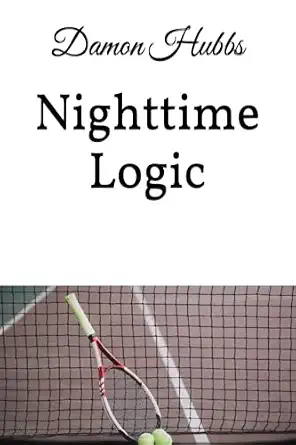
A book’s cover is a promise, but Damon Hubbs’ Nighttime Logic makes two entirely different ones. The digital edition is a chaotic, feverish acid trip: two cyclists with green, alien-like heads riding through the pitch black. Pure, unfiltered surrealism. The physical copy, however, hits with cold realism: a tennis racquet and balls left abandoned by the net on a hard court.
This visual dissonance is the beating heart of Nighttime Logic. Life, as Hubbs writes it, is a desperate attempt to play by the strict, geometric rules of a tennis court while an absurd, narcotic ‘nighttime logic’ unfolds in your head.
Aces and Pop-Culture Anchors
Tennis is an inherently lonely sport, but the game is impossible without someone on the other side. Hubbs’ characters don’t volley tennis balls; they hit back the fragmented pieces of a disintegrating reality. In ‘Poem While Watching the U.S. Open Tennis Tournament,’ the narrator wants Coco Gauff to sign his balls while simultaneously studying medical x-rays of his own colon – from the Appendiceal Orifice to the Splenic Flexure.
To keep from entirely losing their minds, these characters cling to pop culture. Names of tennis champions like Boris Becker, the colors of a Fassbinder film, or the philosophical dread of Jean Baudrillard serve as tethers. This isn’t mere name-dropping; it’s a desperate grip on reality. When the internal world is spiraling out of control, you fill the void with brand names and cinematic references just to feel the physical weight of your own existence.
The Baseline of Burnout
Nighttime Logic moves relentlessly. The reader is dragged from the industrial, monotonous sublime of New England to cheap beers in the Czech Republic and layovers in Zurich. Yet, this isn’t travel literature; it’s a tour of profound exhaustion. The geography shifts, but the narrator’s melancholy and burnout remain constant. It’s a restless search for steady footing on a court that keeps tilting, where changing time zones does nothing to cure the underlying despair.
The Net as a Boundary of Intimacy
The net on a tennis court is a physical barrier, keeping players apart while simultaneously connecting them in the game. True intimacy in Hubbs’ text operates exactly like this. It is never polished or romanticized. It is found in the grit: sharing hangovers, stealing glances in dive bars, and navigating the manic episodes of the people you love. Connection here means standing knee-deep in the wreckage of bad decisions, absolutely broken, while someone across the net continues to hit the ball back to you.
Yellow Butterflies and the Final Score
The match eventually pauses, the racquet dropped by the net. Hubbs captures the exact moment when the grit pays off in ‘Tennis Disaster 85’:
When I tell you the Ukrainian beauty just downed the No. 2 seed in straight sets at Wimbledon, you shrug it off like so many yellow butterflies.
Reading these lines right now, in the midst of the actual renaissance of Ukrainian tennis at Roland Garros, is an absolute balm for my soul. Against the backdrop of howling air raid sirens and historical dread, this isn’t just a poem. It’s a stubborn reminder that no matter how brutal the chaos gets, there is always hope that the final score on the board will end up in your favor.
ABOUT THE ARTIST

Iryna Somkina is a Kyiv-based writer. She is Best Small Fiction nominee; her works appear in Gone Lawn, ANMLY, Heavy Feather Review and everywhere else. She explores ambivalence of intimacy in gritty reality.
YOU MAY ALSO LIKE…

I went to the state of limerence and all I got was this lousy shirt by Andrea Salvador

THE GORKO’S 2027 BEST OF THE NET NOMINATIONS!

A Compendium of Gemstones by James Callan

2 poems by Ryan Quinn Flanagan

Chicken by Joe Couture

Leave a Reply